- Email: jasper@dtooilseal.com
- WhatsApp: +86 183 3255 8601
Difference between TC oil seal and TG oil seal
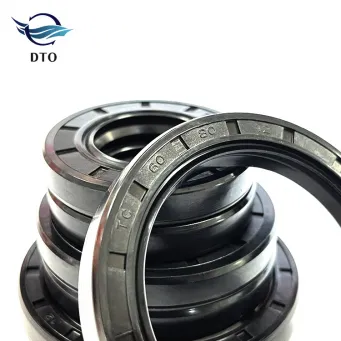
TC oil seals and TG oil seals are both types of skeleton oil seals that are used to seal rotating shafts or reciprocating moving parts to prevent lubricant leaks and contaminants from entering. Despite their similarities, there are some key differences:
Lip Design:
TC oil seal: Usually a double lip design, one lip seal oil to prevent leakage, the other lip to block the entry of external pollutants, providing a better two-way sealing effect.
TG oil seal: In terms of lip design, TC oil seal is identical to TG oil seal
Outer ring features:
TC oil seal: The outer ring is usually smooth rubber surface, without thread.
TG oil seal: The outer ring is threaded, which not only provides better outer diameter sealing performance and prevents external leakage, but also facilitates installation and fixing for small size oil seals.
Applicable conditions and performance:
TC oil seal: Suitable for applications requiring high sealing efficiency, such as automotive engines, hydraulic systems and industrial equipment, especially in medium to high speed applications.
TG oil seals: The design may be more favorable for low-speed applications, such as pumps, gearboxes, and agricultural machinery, but there are also data indicating that TG oil seals provide enhanced sealing performance in some cases, are suitable for smaller sealing environments, and can be manually screwed into the bearing when installed.
Cost and Complexity:
Due to the fact that the design of TG oil seals may be more complex and contain additional structures such as threads, the cost may theoretically be slightly higher, but there is also information that TG oil seals are simpler in design and lower in cost.
In general, the choice of TC and TG oil seals should be based on specific application requirements, including speed, working environment, sealing requirements, cost considerations and other factors. In some cases, the two can be used interchangeably, but choosing the most suitable type of oil seal under a specific working condition will be more conducive to improving the reliability and efficiency of the equipment.
Previous
Difference between TA oil seal and TB oil sealNext
NoneRecent News
Xingtai Dingtong Rubber is a professional products co., Ltd. production and sales of seals enterprises. Founded in 1996, it covers an area of 23,300 square meters, 26 machines, and 3200 kinds of molds. Our products are often exported to North America, Asia, Europe, Northern Europe, Southeast Asia, South Asia, Asia, South America, Africa.
Aug. 24, 2026
Top Features Buyers Look for in High-Performance Automotive Oil Seals
In today’s automotive market, the demand for high-performance oil seals is surging, driven by the need for enhanced engine efficiency and longevity. Car enthusiasts and automotive professionals face common pain points related to oil leaks, subpar performance, and accelerated wear and tear on engine components. To address these concerns, buyers must focus on key features when selecting oil
Aug. 24, 2026
Automotive Oil Seal vs Mechanical Seal: What’s the Difference
In the world of automotive engineering, understanding the differences between automotive oil seals and mechanical seals can save vehicle owners time, money, and unnecessary headaches. Many users frequently ask, "Which seal should I use for my application?" and "What are the real-world implications of choosing the wrong seal?" These questions stem from common pain points like leaks, decreased
Aug. 24, 2026
Pros and Cons of PTFE Automotive Oil Seals in High-Speed Applications
In high-performance automotive environments, the effectiveness of seals is pivotal, particularly in high-speed applications where pressure, temperature, and friction create distinct challenges. PTFE automotive oil seals, renowned for their chemical resistance and low friction properties, often emerge as a popular choice. However, selecting the right oil seal can be daunting, as users frequently
Aug. 24, 2026
Why Automotive EV Systems Require Advanced Oil Seal Technology
As we navigate the transformative landscape of the auto industry, one critical issue stands out: the integrity and efficiency of automotive EV systems. At the core of this dilemma lies the performance of oil seals, a seemingly small component that plays a giant role in the functionality of electric vehicles. Advanced oil seal technology is not just a luxury but a necessity for ensuring the

Dec. 30, 2024
TA, TB, and TC Oil Seal: Respective Uses
Oil seals are mechanical devices used to seal the space between stationary and moving components. They prevent the escape of lubricants and protect machinery from dust and debris, playing a crucial role in maintaining performance and longevity.

Dec. 17, 2024
How Long Does an Oil Seal Last?
Under standard operating conditions (moderate temperatures, low to moderate pressure, clean environment), an oil seal can last between 2,000 to 3,000 hours of operation.
You may like these products


