- Email: jasper@dtooilseal.com
- WhatsApp: +86 183 3255 8601
Difference between TA oil seal and TB oil seal
TA oil seals and TB oil seals are rotary oil seals, which are mainly used to prevent the leakage of lubricants and prevent the intrusion of external pollutants, but there are some differences in structure and application scenarios between them:
Structural features:
TA oil seal: has a double lip design, that is, there are two sealing lips, one of which is the main lip to prevent the leakage of lubricants, and the other is the secondary lip to block the entry of external contaminants. TA oil seal is installed with a spring inside, and adopts a double iron shell structure (that is, the outer iron shell wraps the inner shell), such a design increases the outer diameter rigidity of the oil seal, especially for large caliber applications.
TB oil seal: Also designed for two lips, equipped with mounting spring, but unlike TA oil seal, TB oil seal only has a single shell iron shell, no inner shell wrap. Such a structure may not be as rigid as TA oil seals in outer diameter, but may have advantages in applicability and installation flexibility.
Application field:
TA oil seal: Due to its reinforced outer diameter rigid design, it is usually used in applications requiring greater pressure or larger diameter mounting holes, such as large machinery and heavy industry applications.
TB oil seal: It is more widely used in scenarios where the outer diameter rigidity of the oil seal is not particularly high, but also requires effective sealing, such as car wheel bearings, transmissions and other medium-sized to small rotary moving parts.
Performance and adaptability:
Both have limited conditions of use, such as the line speed generally does not exceed 10 m/s, and the operating temperature and pressure have corresponding limits, but the specific parameters may vary according to the manufacturer and design.
To sum up, the main difference between TA and TB oil seals lies in their structural details, especially the housing design, which affects their rigidity, suitability for installation, and final use environment. The selection should be determined according to the specific working conditions, such as the diameter of the shaft, the expected load, speed and working environment.
Recent News
Xingtai Dingtong Rubber is a professional products co., Ltd. production and sales of seals enterprises. Founded in 1996, it covers an area of 23,300 square meters, 26 machines, and 3200 kinds of molds. Our products are often exported to North America, Asia, Europe, Northern Europe, Southeast Asia, South Asia, Asia, South America, Africa.
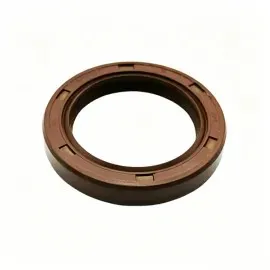
Oct. 23, 2026
NBR, ACM, FKM or PTFE? Material Selection for Mitsubishi Oil Seals
When a Mitsubishi engine begins leaving a thin oil ring around the crankshaft or gearbox input shaft, the seal material is often the real decision—not the seal size alone. An Automotive Oil Seal manufacturer must match fluid chemistry, shaft speed, temperature, pressure, and installation conditions. This guide compares NBR oil seals for Mitsubishi, ACM Mitsubishi crankshaft seals, FKM
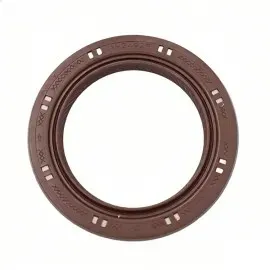
Oct. 23, 2026
How to Specify Stepped Mazda Oil Seal Dimensions for an Accurate Quotation
When I request a quotation for a stepped Mazda oil seal, I do not send only the vehicle model or a photograph. I provide a complete dimensional and operating specification covering the shaft diameter, housing bore, seal width, step geometry, material, spring, temperature, and quantity. By following the practical six-step method below, you can prepare a quotation-ready drawing or data sheet in
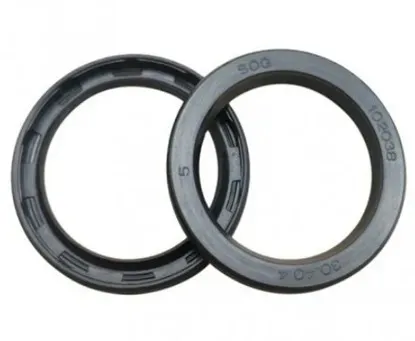
Oct. 23, 2026
Nissan Differential, Pinion and Axle Oil Seals: How to Tell Them Apart
When a Nissan differential, pinion, or axle seal begins to leak, the fastest solution is to identify the seal by its location, dimensions, shaft function, and oil exposure—not by appearance alone. In this guide, we at Dingtong, an experienced Automotive Oil Seal manufacturer, explain a simple five-step method to identify the correct Nissan oil seal, confirm the replacement specification, avoid
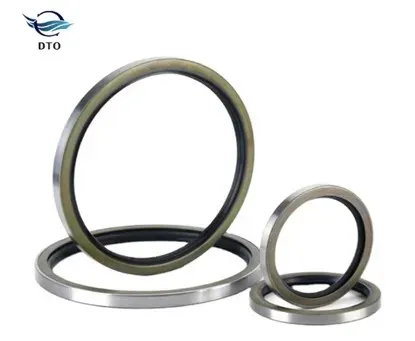
Oct. 23, 2026
How to Identify Toyota Transmission Oil Seals by Installation Position
When I need to identify a Toyota transmission oil seal quickly and accurately, I follow four steps: locate the installation position, measure the seal and shaft, confirm the transmission code or OEM reference, and verify the seal’s rotation direction and material. This method helps workshops, distributors, and purchasing teams avoid incorrect replacements, reduce vehicle downtime, and obtain
Sep. 28, 2026
Why Heat Resistance Is Critical for Automotive Engine Oil Seals
Engine oil seals play a vital role in the overall functionality of automotive engines, yet they often face significant challenges due to heat exposure. One major pain point for vehicle owners is the degradation of engine oil seals over time, leading to oil leakage and reduced engine efficiency. Without proper heat resistance, seals can fail, resulting in costly repairs and potential engine
Sep. 28, 2026
How to Extend the Service Life of Automotive Oil Seals
When working with automotive oil seals, you're almost certainly faced with the constant challenge of ensuring they last as long as possible to maintain optimal performance and reduce costs. I can assure you, with a few practical steps, you can significantly extend the service life of your automotive oil seals. This guide will walk you through efficient methods to achieve this goal, ensuring a
You may like these products

Double iron housing with built-in spring for the lips

TB oil seals demonstrate excellent stability and environmental resilience, especially in extreme conditions such as dust, high humidity or harsh environments rich in corrosive ingredients.
