- Email: jasper@dtooilseal.com
- WhatsApp: +86 183 3255 8601
PU Oil Seals, also referred to as polyurethane oil seals, are sealing components designed to prevent leakage in various mechanical systems. Polyurethane's unique properties make it an ideal material for creating resilient and efficient oil seals.
High Abrasion Resistance - Polyurethane's inherent strength ensures that PU Oil Seals can withstand abrasive environments without significant wear.
Excellent Chemical Resistance - These seals are resistant to a variety of chemicals, making them suitable for use in diverse industrial settings.
Outstanding Flexibility - The flexibility of polyurethane allows PU Oil Seals to conform to different shapes and sizes, providing a secure seal.
Long Service Life - Due to their durability, PU Oil Seals have an extended service life, reducing the need for frequent replacements.
Low Friction Coefficient - The material's low friction properties contribute to the efficiency of the machinery by minimizing energy loss.
Note: These are typical reference ranges. Final selection should be verified with samples and test data.
Shore A hardness: 70–95
Working temperature: approx. −40°C to +100°C (compound dependent; short-term higher limits may be possible)
Common uses: radial shaft seals, rod seals & wipers, backup rings, composite and heavy-duty radial shaft seal designs
Automotive Industry - Used in engines, transmissions, and hydraulic systems to ensure a tight seal and prevent oil leakage.
Industrial Equipment - Employed in pumps, compressors, and other machinery where a reliable seal is crucial for operation.
Agricultural Machinery - Essential for sealing in tractors, harvesters, and other heavy-duty equipment to protect against leaks.
Marine Applications - Utilized in boats and ships for sealing propeller shafts and other components exposed to water and salt.
Construction Machinery - Vital for sealing in heavy equipment such as excavators and loaders to maintain performance and prevent damage.
PU vs NBR (Nitrile): PU generally outperforms NBR in abrasion, tear-resistance and load-bearing applications. NBR may be preferable for some low-temperature flexibility or specific oil swelling characteristics.
PU vs FKM (Fluoroelastomer): FKM offers superior high-temperature and aggressive chemical resistance; PU offers superior mechanical toughness and wear resistance. Choose by matching fluid, temperature and mechanical stress.
Radial shaft seals (single/double lip) — rotating shaft sealing.
Rod seals & wipers — reciprocating rods exposed to contamination.
Backup rings & composite seals — for high pressure or where extrusion resistance is required.
Custom geometries — optional dust lips, metal skeletons and special lip profiles for harsh service.
Enhanced Durability - Polyurethane's strength means that PU Oil Seals are less likely to fail under stress, providing long-lasting protection.
Versatile Compatibility - Suitable for use with a wide range of materials and in various conditions, PU Oil Seals are a universal sealing solution.
Cost-Effective - With a longer service life, PU Oil Seals reduce maintenance and replacement costs, offering a cost-effective solution.
Environmentally Friendly - Polyurethane is recyclable, making PU Oil Seals a more sustainable choice for environmentally conscious businesses.

Please supply the following so we can recommend the optimal PU seal:
Shaft/rod diameter (ID) × bore/outer diameter (OD) × width (thickness) or a drawing/CAD file.
Operating temperature range (normal and peak).
Working medium (hydraulic oil type, grease, water, or other fluids).
Motion type (rotary, reciprocating, intermittent) and speed/frequency.
Presence of contaminants (dust, sand, slurry) and expected particle sizes.
Expected service life or maintenance interval.
DingTong turns procurement concerns into deliverable advantages:
Tailored PU compound selection: We specify and supply high-abrasion polyurethane grades and can tune hardness and chemical compatibility to match your duty cycle.
Lip geometry & tolerance control: Tight control over lip profile and dimensional tolerances ensures low friction, stable oil film and reliable sealing — reducing rework and downtime.
Custom sizes & small-batch prototyping: From initial samples and CAD to small trial runs and volume production — rapid sample delivery and documentation for engineering validation.
Comprehensive QA & warranty: Material certificates, hardness checks, wear tests and functional leak testing are standard; product warranty reduces procurement risk.
Engineering selection & after-sales support: Hands-on selection support, failure analysis and lifecycle guidance to minimize total cost of ownership.
Q1: Can PU oil seals be used directly in hydraulic systems?
A1: Many PU compounds are compatible with mineral-based hydraulic fluids and common greases. Final compatibility depends on the fluid formulation (base oil and additives). Provide the hydraulic oil specification or a sample so we can confirm material compatibility or arrange immersion testing.
Q2: What is the typical operating temperature range for PU seals?
A2: Standard PU compounds typically operate from approximately −40°C to +100°C. For extreme high- or low-temperature applications, we offer modified formulations; please state peak temperatures for evaluation and testing.
Q3: How much longer will PU seals last in dusty environments compared to standard rubber seals?
A3: Lifespan improvement varies with particle hardness/size, lip design and shaft finish. In many field cases, a correctly specified PU seal with a protective wiper or double-lip design can achieve multiple times the service life of basic rubber seals. We can provide comparative wear test reports for similar duty cycles upon request.
Q4: Do you support non-standard sizes and custom designs? What is the minimum order quantity (MOQ)?
A4: Yes — we support custom sizes and geometry and commonly provide small batch trials. MOQ depends on part complexity and tooling requirements; many standard custom sizes can be produced in low quantities (dozens to hundreds). Contact us with dimensions for a specific MOQ quote.
Q5: Can you provide samples and test reports?
A5: Yes — samples, material certificates, hardness reports and wear or functional test data can be supplied for engineering validation. Third-party testing can be arranged if needed.
Q6: How should PU seals be installed and lubricated?
A6: Remove sharp edges and burrs from shafts and grooves; chamfer installation edges and use compatible assembly lubricant to reduce initial friction. Avoid overstretching the lip during installation. Where contamination is expected, pair the seal with a dust wiper or select a double-lip arrangement.
Q7: What are lead times for samples and mass production?
A7: Lead times vary by standard vs. custom parts and current production load. Standard sizes often have short lead times; custom formulations and new tooling require longer development and validation timelines. We will provide a clear timeline after design confirmation.
Q8: Do you provide material certifications and batch traceability?
A8: Yes. We supply material certificates, hardness test results and, when requested, batch traceability and inspection reports to support customer quality requirements.
Q9: How do you handle failure analysis if a seal underperforms in the field?
A9: DingTong offers failure analysis services: return sample inspection, lab wear/chemical testing, photos and operational data review. Based on findings we propose design or material adjustments and run comparative tests as required.
Q10: Can you help reduce total cost of ownership (TCO) with PU seals?
A10: Yes. By selecting higher-durability compounds, correct lip geometry and appropriate protective features, we reduce replacement frequency, downtime and maintenance labor — lowering TCO despite slightly higher per-part cost in many cases.
Recent News
Xingtai Dingtong Rubber is a professional products co., Ltd. production and sales of seals enterprises. Founded in 1996, it covers an area of 23,300 square meters, 26 machines, and 3200 kinds of molds. Our products are often exported to North America, Asia, Europe, Northern Europe, Southeast Asia, South Asia, Asia, South America, Africa.
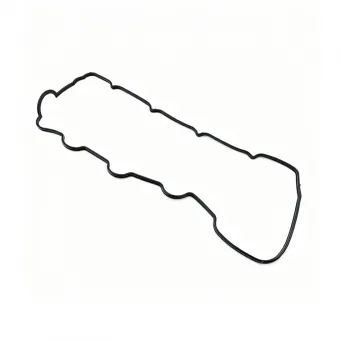
Aug. 24, 2026
Top Features Buyers Look for in High-Performance Automotive Oil Seals
In today’s automotive market, the demand for high-performance oil seals is surging, driven by the need for enhanced engine efficiency and longevity. Car enthusiasts and automotive professionals face common pain points related to oil leaks, subpar performance, and accelerated wear and tear on engine components. To address these concerns, buyers must focus on key features when selecting oil
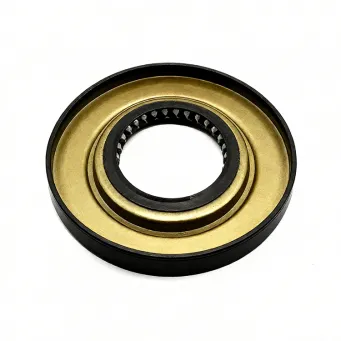
Aug. 24, 2026
Automotive Oil Seal vs Mechanical Seal: What’s the Difference
In the world of automotive engineering, understanding the differences between automotive oil seals and mechanical seals can save vehicle owners time, money, and unnecessary headaches. Many users frequently ask, "Which seal should I use for my application?" and "What are the real-world implications of choosing the wrong seal?" These questions stem from common pain points like leaks, decreased
Aug. 24, 2026
Pros and Cons of PTFE Automotive Oil Seals in High-Speed Applications
In high-performance automotive environments, the effectiveness of seals is pivotal, particularly in high-speed applications where pressure, temperature, and friction create distinct challenges. PTFE automotive oil seals, renowned for their chemical resistance and low friction properties, often emerge as a popular choice. However, selecting the right oil seal can be daunting, as users frequently
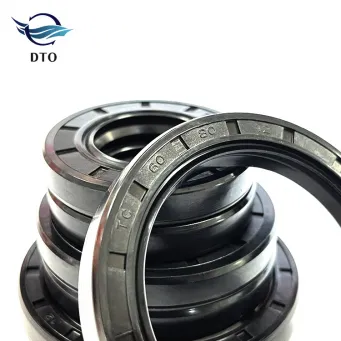
Aug. 24, 2026
Why Automotive EV Systems Require Advanced Oil Seal Technology
As we navigate the transformative landscape of the auto industry, one critical issue stands out: the integrity and efficiency of automotive EV systems. At the core of this dilemma lies the performance of oil seals, a seemingly small component that plays a giant role in the functionality of electric vehicles. Advanced oil seal technology is not just a luxury but a necessity for ensuring the

Dec. 30, 2024
TA, TB, and TC Oil Seal: Respective Uses
Oil seals are mechanical devices used to seal the space between stationary and moving components. They prevent the escape of lubricants and protect machinery from dust and debris, playing a crucial role in maintaining performance and longevity.

Dec. 17, 2024
How Long Does an Oil Seal Last?
Under standard operating conditions (moderate temperatures, low to moderate pressure, clean environment), an oil seal can last between 2,000 to 3,000 hours of operation.
Subscribe to Our Newsletter
Choose us, is to choose the quality of noble products and services, is to choose the source of success and interests.
