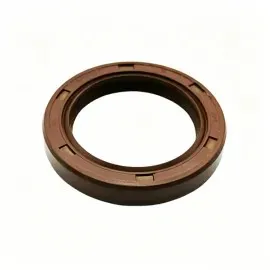
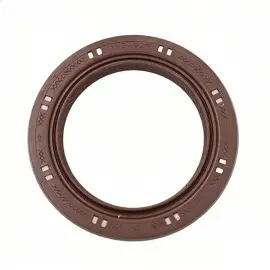
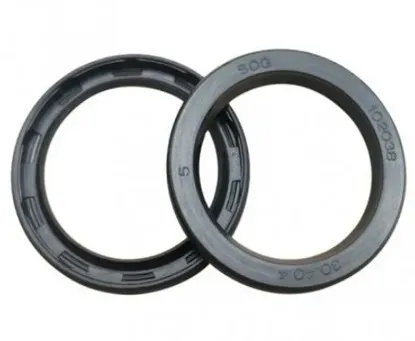
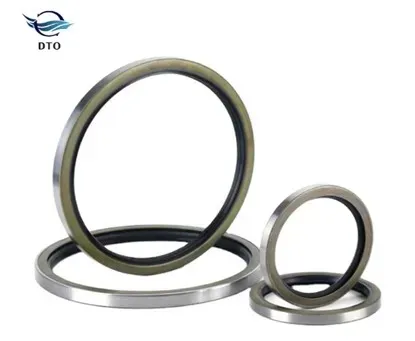
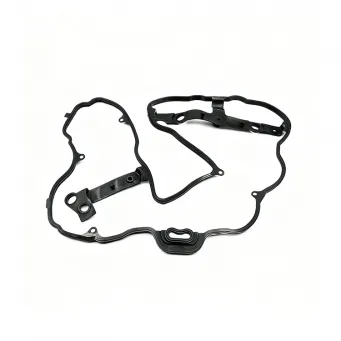
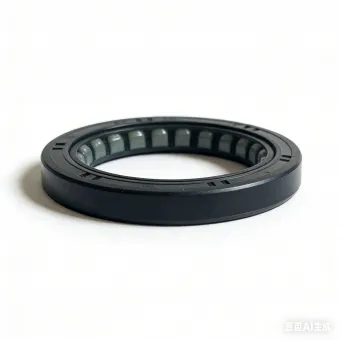
When a Mitsubishi engine begins leaving a thin oil ring around the crankshaft or gearbox input shaft, the seal material is often the real decision—not the seal size alone. An Automotive Oil Seal manufacturer must match fluid chemistry, shaft speed, temperature, pressure, and installation conditions. This guide compares NBR oil seals for Mitsubishi, ACM Mitsubishi crankshaft seals, FKM high-temperature oil seals, and PTFE Mitsubishi transmission seals using material compatibility, temperature rating, lip design, and compression-set behavior. It also explains how to choose a Mitsubishi Oil Seal Supplier, including Dingtong, without paying for performance the application does not need.

Mitsubishi Oil Seal Supplier Comparison: Why Material Changes the Repair Result
A Mitsubishi oil seal can have the correct inner diameter, outer diameter, and width yet still fail prematurely. A delivery van operating with conventional engine oil may need a different compound from a Mitsubishi excavator exposed to hydraulic fluid, dust, and elevated housing temperature. The common user questions are practical: Will NBR survive synthetic oil? Is FKM worth the additional cost? Can ACM replace NBR? Is PTFE necessary for a high-speed crankshaft? The answers depend on the complete operating envelope rather than on material reputation.
In a service case recorded during a Mitsubishi diesel maintenance project, a fleet mechanic replaced a leaking front crankshaft seal with a standard NBR part. The leak returned after approximately 4,000 km. Inspection showed a hardened sealing lip and a polished wear track on the shaft. The replacement seal was changed to an ACM compound because the application combined hot engine oil with continuous operation near the upper temperature range of standard NBR. The following inspection interval exceeded 20,000 km without visible leakage. This type of result does not mean ACM is universally better; it shows why oil temperature, shaft condition, and lubricant type must be considered together.
Mitsubishi Oil Seal Material Comparison Table
The figures below are typical engineering ranges. Actual values vary with compound formulation, filler package, spring material, lip geometry, shaft finish, and the Mitsubishi model. A supplier should confirm the compound grade instead of identifying a seal only as “rubber.”
| Material | Typical continuous temperature range | Oil and fuel resistance | Typical speed capability | Main advantages | Main limitations | Indicative cost level |
|---|---|---|---|---|---|---|
| NBR よく used as nitrile rubber |
Approximately -40°C to +100/+120°C | Good resistance to mineral oils, diesel fuel, and many greases; compatibility with some modern additives must be checked | Suitable for common automotive shaft speeds when lubrication and shaft finish are correct | Good balance of price, abrasion resistance, and availability | Temperature, ozone, and weathering resistance are lower than FKM and ACM | Low |
| ACM Acrylic rubber |
Approximately -30°C to +150°C | Strong resistance to hot mineral oil, transmission fluid, and many automotive lubricants | Good for rotating automotive shafts under elevated-temperature conditions | Better hot-oil durability than standard NBR; suitable for many crankshaft and transmission applications | Poor resistance to water, glycol-based fluids, and low-temperature flexibility compared with NBR | Medium |
| FKM Fluoroelastomer, commonly associated with Viton-type compounds |
Approximately -20°C to +200°C; special grades may extend beyond this range | Excellent resistance to mineral oils, fuels, many synthetic lubricants, and high-temperature chemicals | Suitable for demanding high-speed or high-temperature rotating equipment when lip design is appropriate | Low compression set, strong chemical resistance, and high-temperature stability | Higher price; reduced low-temperature flexibility; not universally compatible with hot steam, certain amines, or some polar fluids | High |
| PTFE Polytetrafluoroethylene |
Approximately -60°C to +260°C, depending on grade and design | Very broad chemical resistance and low friction; formulation and energizer still matter | Can support high shaft speed with correct surface finish, running-in procedure, and installation | Low friction, low stick-slip tendency, and strong high-temperature performance | Not an elastomer; sensitive to installation damage, shaft runout, surface finish, and incorrect lip orientation | High to very high |
For reference, a rubber oil seal commonly requires a shaft surface finish near 0.2–0.8 μm Ra, while PTFE designs often require a controlled, lead-free shaft finish and a carefully defined running surface. The exact specification must follow the seal manufacturer’s drawing. Excessive shaft roughness can abrade the lip; a surface that is too smooth may retain insufficient lubricant and increase heat generation.
Mitsubishi Oil Seal Supplier Guidance by Material
NBR Mitsubishi Oil Seals for Standard Engine and Gearbox Repairs
NBR is usually the most economical starting point for older Mitsubishi passenger cars, light trucks, agricultural equipment, and general gearboxes using conventional mineral-based lubricants. Its typical acrylonitrile content controls the balance between oil resistance and low-temperature flexibility: higher acrylonitrile improves resistance to hydrocarbons but can reduce flexibility in cold conditions.
NBR is appropriate when the oil temperature remains comfortably below 100°C, the application has limited exposure to ozone and sunlight, and the lubricant is known to be compatible. It is not automatically the right choice for a modern engine using a high-temperature synthetic oil, nor for a turbocharged application where the seal housing regularly exceeds the compound’s continuous rating.
ACM Mitsubishi Crankshaft Seals for Hot Automotive Oil
ACM is a strong middle option for Mitsubishi crankshaft seals and transmission seals exposed to hot mineral oil or automatic transmission fluid. Compared with standard NBR, ACM generally retains its sealing properties at higher temperatures and offers better resistance to hot-air aging. Its weakness is low-temperature behavior and limited resistance to water-based fluids.
A practical selection rule is to consider ACM when the application is automotive, oil-lubricated, and likely to operate around 120–150°C at the seal lip. However, the temperature at the housing is not always the temperature at the lip. Friction, shaft speed, poor lubrication, and nearby exhaust heat can raise the lip temperature above the measured sump temperature.
FKM Mitsubishi Oil Seals for High-Temperature and Chemical Exposure
FKM is justified when the seal faces persistent heat, aggressive fuel additives, synthetic lubricants, or a high risk of compression set. A typical FKM compound can remain functional near 200°C, but the actual limit depends on the specific grade, spring material, dust lip, and exposure time.
FKM should not be selected only because a vehicle is “high performance.” If a Mitsubishi gearbox operates at 80°C with ordinary gear oil, an FKM seal may provide little practical benefit over a correctly specified NBR or ACM seal. Conversely, using NBR in a high-temperature turbocharger-adjacent location can lead to hardening, loss of radial lip load, and leakage well before the nominal service interval.
PTFE Mitsubishi Transmission Seals for Low Friction and Severe Conditions
PTFE is different from the three elastomeric materials. Its sealing action depends on a thin, low-friction lip rather than the same elastic recovery mechanism used by NBR, ACM, and FKM. PTFE can be valuable in high-speed crankshaft and transmission applications where friction, heat, chemical exposure, or long-term aging is a priority.
Installation quality becomes critical. The lip should not be folded, scratched, contaminated, or installed against the direction specified by the manufacturer. Many PTFE seals are supplied with an installation sleeve and may require dry installation or a defined pre-lubrication method. Applying ordinary grease without checking the instructions can interfere with the running-in process.
Scenario Adaptation from a Mitsubishi Oil Seal Supplier
| Operating scenario | First material to evaluate | Why | Material to avoid unless specifically validated |
|---|---|---|---|
| Older Mitsubishi engine, mineral oil, moderate temperature | NBR | Low cost, good oil resistance, broad availability | PTFE if the housing and shaft are not prepared for it |
| Hot engine oil or automatic transmission fluid | ACM | Better high-temperature oil aging resistance than standard NBR | NBR when measured lip temperature approaches its continuous limit |
| Turbocharged engine, high-temperature lubricant, fuel exposure | FKM | Higher temperature and chemical resistance | Low-grade NBR without compound verification |
| High shaft speed, low friction requirement, severe chemical exposure | PTFE | Low friction and broad chemical resistance | Any PTFE part installed without shaft and installation checks |
| Cold-weather equipment using oil and exposed to sub-zero temperatures | NBR low-temperature grade or validated PTFE | Better cold flexibility than standard ACM or many FKM grades | Standard ACM or FKM if flexibility below -20°C is required |
| Water-contaminated environment or coolant exposure | Application-specific NBR, EPDM-compatible design, or another validated compound | Material must be matched to the actual fluid, not only engine oil | ACM where water or glycol exposure is continuous |
The decision should also include shaft condition. A new seal cannot correct a groove worn into the shaft by a previous lip. If the wear depth is measurable, a repair sleeve, a changed seal position, or shaft replacement may be necessary. Radial runout, often targeted below approximately 0.05–0.10 mm depending on the design, can also pump oil past the lip even when the material is correct.
Price Analysis: Mitsubishi Oil Seal Supplier Cost Versus Failure Cost
Material price is only one part of the ownership cost. In many repair markets, a single oil seal may represent a relatively small purchase, while labor for removing a transmission or timing cover is several times higher. A useful comparison is therefore:
- NBR: commonly the baseline cost, often the best value for moderate-temperature mineral-oil service.
- ACM: usually costs more than NBR but can reduce repeat repairs in hot automotive oil applications.
- FKM: often costs roughly 1.5–3 times the price of an equivalent NBR seal, depending on size, compound, and production volume.
- PTFE: may cost roughly 2–5 times a conventional NBR seal because of material price, precision forming, and installation requirements.
These are indicative market relationships rather than fixed quotations. For example, upgrading from a 10-unit NBR seal to a 20-unit FKM seal is economically reasonable when it prevents a second 200-unit labor operation. It is less attractive when the application operates at 70°C and the original NBR compound already has a proven service life.
Customer Feedback and Mitsubishi Oil Seal Supplier Service Experience
Feedback from maintenance users usually focuses on three issues: whether the seal fits without modification, whether leakage stops after installation, and whether the supplier can provide a traceable material specification. A low purchase price does not compensate for an incorrect lip direction, an inaccurate outer diameter, or an unverified rubber compound.
One Dingtong customer maintaining Mitsubishi industrial engines reported that the first replacement batch used an unmarked black rubber compound. Several units developed seepage after extended high-temperature operation. For the next batch, Dingtong provided a compound designation, dimensional inspection data, and a sealing-lip configuration matched to the shaft rotation. The maintenance team reported that the repeat-leakage rate fell from several units per service batch to zero in the follow-up batch. This is a customer case rather than a universal performance guarantee, but it demonstrates the value of batch traceability and application review.
Another technician working on a Mitsubishi gearbox initially requested FKM because it was considered the “best” material. After reviewing the measured temperature, lubricant, shaft speed, and winter operating conditions, the supplier recommended ACM instead. The technician avoided unnecessary material cost while retaining a suitable hot-oil margin. An unbiased supplier should be willing to recommend a lower-priced material when the data supports it.
Ranked Selection Suggestions from a Mitsubishi Oil Seal Supplier
1. Choose NBR for the Lowest-Cost, Normal-Temperature Repair
Select NBR when the lubricant is compatible, the seal-lip temperature is normally below about 100°C, and the shaft and housing are in good condition. It is the sensible choice for many standard Mitsubishi engine and gearbox repairs. Request the actual compound specification if the vehicle uses modern synthetic oil or fuel containing strong additive packages.
2. Choose ACM for the Best Balance in Hot Automotive Oil
ACM is often the most balanced option for Mitsubishi crankshaft and transmission applications that run hotter than ordinary NBR service but do not require the chemical and temperature margin of FKM. It combines a moderate cost increase with improved resistance to hot-oil aging.
3. Choose FKM for Confirmed High Temperature or Chemical Stress
FKM deserves its price when the measured or reliably calculated lip temperature approaches the NBR or ACM limit, or when fuel and synthetic lubricant exposure is severe. Confirm low-temperature requirements before ordering because many standard FKM compounds are less flexible than NBR below -20°C.
4. Choose PTFE for Low-Friction, High-Speed, or Special Chemical Requirements
PTFE is the specialist option. It is appropriate when friction reduction, high-temperature stability, or chemical resistance is more important than the simplest installation. It is not the automatic upgrade for every Mitsubishi oil seal because shaft finish, runout, installation sleeve use, and running-in procedure directly affect results.
How to Verify a Mitsubishi Oil Seal Supplier Before Ordering
Before requesting a quotation, provide the Mitsubishi model, engine or transmission code, original seal number, shaft diameter, housing diameter, width, rotation direction, lubricant, operating temperature, and approximate shaft speed. Include photographs of the old seal and shaft if the failure mode is unclear.
A technically reliable Mitsubishi Oil Seal Supplier should be able to answer the following questions:
- What exact material or compound family is supplied: NBR, ACM, FKM, PTFE, or a modified grade?
- What is the continuous and peak temperature rating of that specific compound?
- Is the seal compatible with the actual engine oil, gear oil, fuel, or hydraulic fluid?
- What shaft surface finish, hardness, runout, and chamfer are recommended?
- Does the seal require a dust lip, garter spring, installation sleeve, or directional pumping geometry?
- Can the supplier provide dimensional inspection, batch identification, and material documentation?
Dingtong can be considered when the buyer needs Mitsubishi oil seal dimensions, compound selection, custom lip designs, and production-batch communication in one sourcing process. The correct choice should still be based on the application data, not on the brand name alone.
Final Decision: Who Should Use NBR, ACM, FKM, or PTFE?
Choose NBR for cost-sensitive Mitsubishi repairs operating in ordinary oil and temperature conditions. Choose ACM when hot automotive oil makes NBR’s temperature margin uncertain. Choose FKM for verified high-temperature, fuel, or chemical exposure. Choose PTFE when low friction and severe-service performance justify precision installation and higher cost. Users should not choose any material solely because it is marketed as premium; a mismatched PTFE or FKM seal can perform worse than a correctly specified NBR or ACM part.
For the next step, record the oil type, maximum lip temperature, shaft speed, shaft condition, and Mitsubishi part number, then ask Dingtong or another qualified Mitsubishi Oil Seal Supplier for a material recommendation and dimensional confirmation. The most useful long-tail search terms are best Mitsubishi oil seal material for high temperature, NBR versus FKM Mitsubishi crankshaft seal, and PTFE Mitsubishi transmission oil seal supplier. Relevant selection concepts include automotive oil seal compatibility, shaft surface finish, and compression set resistance; the decisive professional terms are radial lip load, thermal aging, and chemical swell. That evidence-based process gives the buyer a clearer path to the right material, the correct installation method, and a lower risk of repeat leakage.