- Email: jasper@dtooilseal.com
- WhatsApp: +86 183 3255 8601
How to Identify Toyota Transmission Oil Seals by Installation Position
When I need to identify a Toyota transmission oil seal quickly and accurately, I follow four steps: locate the installation position, measure the seal and shaft, confirm the transmission code or OEM reference, and verify the seal’s rotation direction and material. This method helps workshops, distributors, and purchasing teams avoid incorrect replacements, reduce vehicle downtime, and obtain the right Toyota transmission oil seal from Dingtong or another qualified Toyota Oil Seal Supplier.
A Toyota transmission may use several oil seals with similar outer diameters but completely different functions. A front pump seal, input shaft seal, output shaft seal, selector shaft seal, or differential side seal can appear interchangeable until installation.
Using the wrong seal may cause:
As an Automotive Oil Seal manufacturer, Dingtong recommends identifying the sealing location before comparing dimensions. The installation position determines the shaft speed, pressure exposure, oil type, temperature range, dust protection requirement, and whether the seal must support one-way or bidirectional rotation.
!
Begin by identifying where the seal is installed. Do not remove the old seal before recording its position, orientation, and surrounding components.
This seal is commonly used in automatic transmissions between the torque converter and transmission oil pump.
Typical identification features include:
A front pump seal often has a robust elastomer compound and a carefully controlled interference fit. A seal with the correct diameter but the wrong lip geometry can leak immediately after installation.
On manual transmissions and some transfer cases, the input shaft seal is located around the shaft entering the gearbox housing.
Check the following:
Input shaft seals can be confused with front pump seals because both are installed near the transmission front. The transmission type and housing design must therefore be confirmed before ordering.
The output shaft seal is usually installed at the rear of the transmission or extension housing. It seals the area where the propeller shaft, flange, or yoke exits the transmission.
Important clues include:
For Toyota rear-wheel-drive vehicles, the output seal may be listed by transmission family, extension housing design, or propeller-shaft configuration. Always confirm the transmission model rather than relying only on the vehicle year.
This smaller seal is installed around the shift selector shaft. It is often overlooked because it does not resemble a conventional large transmission seal.
Identify it by:
A selector shaft seal may be a compact rubber seal, an O-ring-style component, or a specialized lip seal depending on the Toyota transmission design.
On transaxles and four-wheel-drive systems, differential side seals are installed where the axle shafts enter the differential housing.
Typical characteristics include:
Although left and right seals may look similar, some applications use different part numbers or different flange depths. I always compare both sides before placing a bulk order.
A Toyota transfer case may contain several seals, including input, output, front propeller-shaft, rear propeller-shaft, and selector shaft seals.
For correct identification, record:
A transfer-case seal should not be selected solely by matching the transmission output seal. The shaft diameter, housing bore, and operating environment may be different.
Once the installation position is known, measure the old seal and the mating components. For reliable purchasing, I record dimensions in millimeters using the standard seal format:
Inside diameter × outside diameter × width
For example:
35.00 × 52.00 × 7.00 mm
However, the dimensions should be verified rather than copied from memory.
Use a calibrated digital caliper or micrometer to measure:
Shaft diameter
Measure the unworn section of the shaft, not the groove created by the old sealing lip.
Housing bore diameter
Measure the bore where the seal’s outside diameter is pressed into the case.
Seal width
Confirm whether the replacement must be flush, recessed, or installed to a specific depth.
Cavity depth
A wider seal may contact an internal bearing or shoulder.
Shaft runout and surface condition
Excessive runout, corrosion, or a wear groove can cause leakage even with a correctly sized seal.
For supplier communication, Dingtong can use dimensional data controlled to a target precision of 0.01 mm, subject to the product drawing and application tolerance. I recommend sending clear measurement photos and the original seal markings together with the dimensions.
Inspect the seal for:
Do not assume that an unreadable or partial number is sufficient. Photograph the seal from the front, rear, and side so the Toyota Oil Seal Supplier can compare the construction.
Correct identification involves more than size. The seal construction must match the operating environment.
| Identification Factor | What to Check | Why It Matters |
|---|---|---|
| Elastomer | NBR, FKM, ACM, or application-specific compound | Determines oil, temperature, and chemical resistance |
| Primary lip | Standard, low-friction, or high-pressure profile | Controls fluid retention and friction |
| Garter spring | Present, enclosed, or missing | Maintains lip contact on the shaft |
| Dust lip | Single, double, or auxiliary lip | Protects against mud and water |
| Case design | Rubber-covered, metal-cased, or reinforced | Affects bore sealing and installation |
| Rotation | Standard or directional | Important for spiral-groove seals |
| Width | Original width and installation depth | Prevents interference with bearings or shoulders |
NBR is widely used for conventional transmission oils and many automotive applications. It provides good resistance to petroleum-based lubricants and is often cost-effective.
FKM is suitable for higher-temperature or chemically demanding applications. It may be specified where fluid compatibility and thermal resistance exceed standard NBR requirements.
ACM can be used in selected automotive applications requiring resistance to elevated-temperature transmission fluids, although the correct compound depends on the fluid and design conditions.
I never select material only because it is more expensive. The seal compound must be compatible with the specific Toyota transmission fluid, operating temperature, shaft speed, and housing design.
Vehicle information alone is not always enough. The same Toyota model may use different transmissions because of:
Before ordering, collect:
A professional Automotive Oil Seal manufacturer will normally use these details to cross-check the drawing, tooling, material, and application data rather than relying on a generic catalog match.
Use the following quick reference during inspection:
| Installation Position | Common Shaft Type | Main Risk | Identification Priority |
|---|---|---|---|
| Front pump | Torque converter neck or input hub | High-speed ATF leakage | Shaft diameter, lip direction, case depth |
| Input shaft | Gearbox input shaft | Clutch or bellhousing contamination | Transmission code and shaft measurement |
| Output shaft | Propeller-shaft yoke or flange | Rear housing oil leakage | Yoke diameter, housing bore, dust protection |
| Selector shaft | Shift control shaft | Small but persistent leakage | Shaft diameter and seal profile |
| Differential side | Axle or stub shaft | Gear oil loss and bearing damage | Left/right position, flange depth |
| Transfer case output | Drive shaft flange or yoke | Water and dirt intrusion | Output position and rotation condition |
This table is a starting point, not a substitute for the service drawing or physical measurement.
After identifying the seal, request technical documentation from the supplier. Dingtong or another qualified Toyota Oil Seal Supplier should be able to clarify:
For quality verification, I recommend requesting a control plan that includes dimensional inspection to 0.01 mm where applicable, visual inspection of 100% of finished seals, and batch traceability.
Relevant standards may include:
These standards do not automatically prove that a seal is suitable for every Toyota transmission. They provide a structured basis for evaluating material, geometry, and performance.
A reliable Automotive Oil Seal manufacturer should also explain which tests apply to the specific seal design instead of listing standards without test records.
A removed seal may be torn, hardened, or deformed. In that case:
Possible causes include:
Apply the correct lubricant to the sealing lip, use a proper installation sleeve, and drive the seal evenly. Never strike the lip directly with a hammer.
Confirm both part numbers and installation depths. Differential side seals can differ by side even when their visible dimensions are similar. Mark each seal clearly before installation.
A generic size is not enough for a transmission application. Ask for the seal drawing, material specification, lip profile, and cross-reference confirmation. Dingtong can be asked to provide sample approval before production quantities are released.
The following tools make identification faster and more repeatable:
For purchasing teams, I recommend creating a seal identification sheet with one line for every Toyota transmission position. This reduces repeated questions and gives the Automotive Oil Seal manufacturer a complete technical brief at the first inquiry.
Dingtong can be evaluated as a Toyota Oil Seal Supplier by reviewing its ability to provide:
For distributors and repair networks, this process helps reduce incorrect orders and prevents repeated vehicle returns caused by oil leakage. For manufacturers and importers, it also supports more consistent product qualification and inventory planning.
The right Automotive Oil Seal manufacturer should focus on the complete sealing system—not just the nominal size printed on the package.
Before ordering or installing a replacement, confirm these points:
By following these steps, I can identify Toyota transmission oil seals by installation position with much greater confidence. Whether the requirement is a front pump seal, input shaft seal, output shaft seal, differential side seal, or transfer-case seal, Dingtong provides a practical starting point for accurate technical communication and dependable sourcing from an experienced Automotive Oil Seal manufacturer.
Recent News
Xingtai Dingtong Rubber is a professional products co., Ltd. production and sales of seals enterprises. Founded in 1996, it covers an area of 23,300 square meters, 26 machines, and 3200 kinds of molds. Our products are often exported to North America, Asia, Europe, Northern Europe, Southeast Asia, South Asia, Asia, South America, Africa.
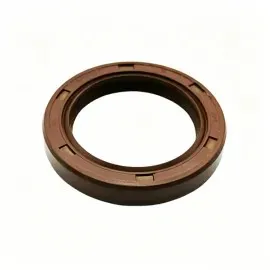
Oct. 23, 2026
NBR, ACM, FKM or PTFE? Material Selection for Mitsubishi Oil Seals
When a Mitsubishi engine begins leaving a thin oil ring around the crankshaft or gearbox input shaft, the seal material is often the real decision—not the seal size alone. An Automotive Oil Seal manufacturer must match fluid chemistry, shaft speed, temperature, pressure, and installation conditions. This guide compares NBR oil seals for Mitsubishi, ACM Mitsubishi crankshaft seals, FKM
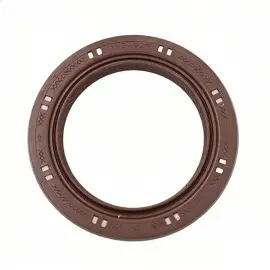
Oct. 23, 2026
How to Specify Stepped Mazda Oil Seal Dimensions for an Accurate Quotation
When I request a quotation for a stepped Mazda oil seal, I do not send only the vehicle model or a photograph. I provide a complete dimensional and operating specification covering the shaft diameter, housing bore, seal width, step geometry, material, spring, temperature, and quantity. By following the practical six-step method below, you can prepare a quotation-ready drawing or data sheet in
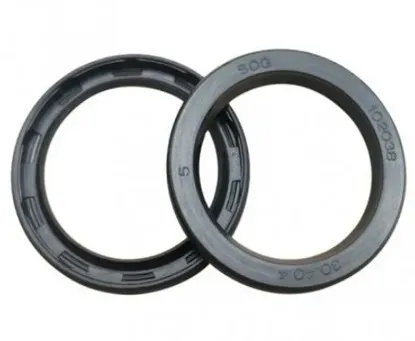
Oct. 23, 2026
Nissan Differential, Pinion and Axle Oil Seals: How to Tell Them Apart
When a Nissan differential, pinion, or axle seal begins to leak, the fastest solution is to identify the seal by its location, dimensions, shaft function, and oil exposure—not by appearance alone. In this guide, we at Dingtong, an experienced Automotive Oil Seal manufacturer, explain a simple five-step method to identify the correct Nissan oil seal, confirm the replacement specification, avoid
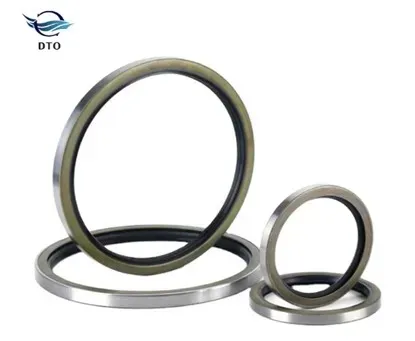
Oct. 23, 2026
How to Identify Toyota Transmission Oil Seals by Installation Position
When I need to identify a Toyota transmission oil seal quickly and accurately, I follow four steps: locate the installation position, measure the seal and shaft, confirm the transmission code or OEM reference, and verify the seal’s rotation direction and material. This method helps workshops, distributors, and purchasing teams avoid incorrect replacements, reduce vehicle downtime, and obtain
Sep. 28, 2026
Why Heat Resistance Is Critical for Automotive Engine Oil Seals
Engine oil seals play a vital role in the overall functionality of automotive engines, yet they often face significant challenges due to heat exposure. One major pain point for vehicle owners is the degradation of engine oil seals over time, leading to oil leakage and reduced engine efficiency. Without proper heat resistance, seals can fail, resulting in costly repairs and potential engine
Sep. 28, 2026
How to Extend the Service Life of Automotive Oil Seals
When working with automotive oil seals, you're almost certainly faced with the constant challenge of ensuring they last as long as possible to maintain optimal performance and reduce costs. I can assure you, with a few practical steps, you can significantly extend the service life of your automotive oil seals. This guide will walk you through efficient methods to achieve this goal, ensuring a
You may like these products


